
The Future of U.S. Homeland Missile Defense
How It Works
Today's threats are faster, more sophisticated and harder to stop than ever before. NGI is designed to detect and defeat those threats in space before they ever reach the homeland. Here's how our innovative system works:
- Detection: Satellites and radar networks identify incoming threats and transfer the data to NGI instantly
- Tracking: NGI locks on to the threat after advanced sensors analyze the threat's trajectory to distinguish it from decoys and debris
- Launch: Once a threat is confirmed, NGI is launched from a hardened silo and begins its high-speed journey into space
- Intercept: Guided by onboard sensors and ground data, NGI maneuvers in space to intercept the threat in its midcourse phase
- Target: NGI's kill vehicle collides with the incoming threat, destroying it before it can reach the U.S. homeland

The Big Picture
Over the last 70 years, the evolution of missile technology has transformed national defense efforts, requiring cutting-edge innovation to counter the next generation of threats to the U.S. homeland. Lockheed Martin leads this mission by leveraging advanced missile defense integration to deter and defeat threats, effectively "hitting a bullet with a bullet." By unifying land, sea and space-based data into a real-time digital ecosystem, we ensure immediate threat detection and rapid response for today's warfighter.
Uniting artificial intelligence and modular architecture systems, we can upgrade existing defense systems with emerging technologies. Backed by a workforce of 120,000 employees, we continue to engineer next-generation air and missile defense technologies designed to safeguard critical national security demands.
Initial Program Award
In 2021, the Missile Defense Agency awarded Lockheed Martin a $3.7 billion contract for the development and demonstration phases of the Next Generation Interceptor (NGI) program. The project aims to modernize the existing Ground-based Midcourse Defense (GMD) system.
Digital Design
Our "born digital" approach utilizes a common digital thread, model-based engineering tools and virtual simulations. This modular architecture accelerates testing, streamlines engineering decisions and reduce early development risk before physical hardware is ever built.
Review & Testing
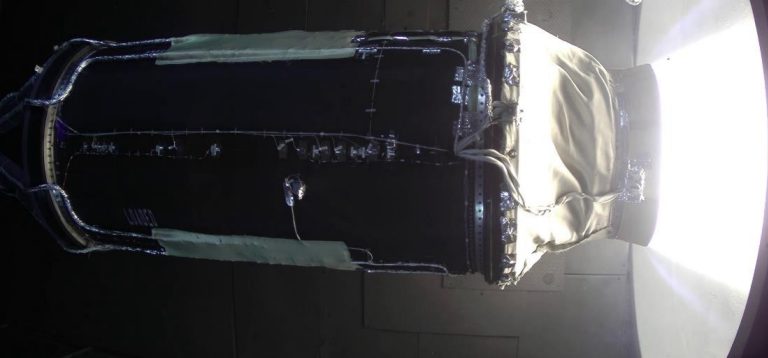
The program's test and review stages focus on rigorous risk reduction, hardware qualification and digital validation ahead of full production. Engineers conduct destructive physical tests on real hardware, like successfully executing a structural burst test on NGI's second-stage rocket motor case.
Path to CDR
Lockheed Martin is advancing the Next Generation Interceptor toward its Critical Design Review (CDR) by completing hardware and design milestones that demonstrate the program's design maturity and pave the way for full production and fielding by 2030.
A Modern Defense Hub
On June 1, 2026, Lockheed Martin opened Missile Assembly Building 5 (MAB-5) in Courtland, Alabama, to produce the Next Generation Interceptor (NGI) for the Missile Defense Agency. The facility uses advanced digital manufacturing to improve efficiency and precision. NGI is a modular interceptor designed for rapid upgrades and integrated missile defense, strengthening the nation’s ability to deter, detect and defeat evolving missile threats.


Next Generation Capability
Lockheed Martin has reached a pivotal development milestone for the Next Generation Interceptor (NGI), successfully completing a critical burst test of its second-stage motor case and advancing the program toward Critical Design Review later this year. The successful burst test is a significant step toward fielding NGI by 2030.
Building the Arsenal of Freedom
Lockheed Martin broke ground on a new 87,000-square-foot Munitions Production Center in Troy, Alabama, to expand manufacturing capacity for the U.S. and its allies, nearly doubling the site's existing footprint. Primarily constructed to accelerate the production of Terminal High Altitude Area Defense (THAAD) interceptors, the new facility is also designed to support future work on the Next Generation Interceptor (NGI) program, serving as a key component of our expanded infrastructure in Alabama.

We're engineering a better tomorrow.
Your individual skills play a critical role in changing the way the world works and helping us develop products that make it a safer place to achieve your goals. Our teams are made up of diverse employees from a wide range of disciplines and backgrounds, working together to tackle complex challenges and push the boundaries of innovation.
Explore our skill areas to find the right opportunity for you.